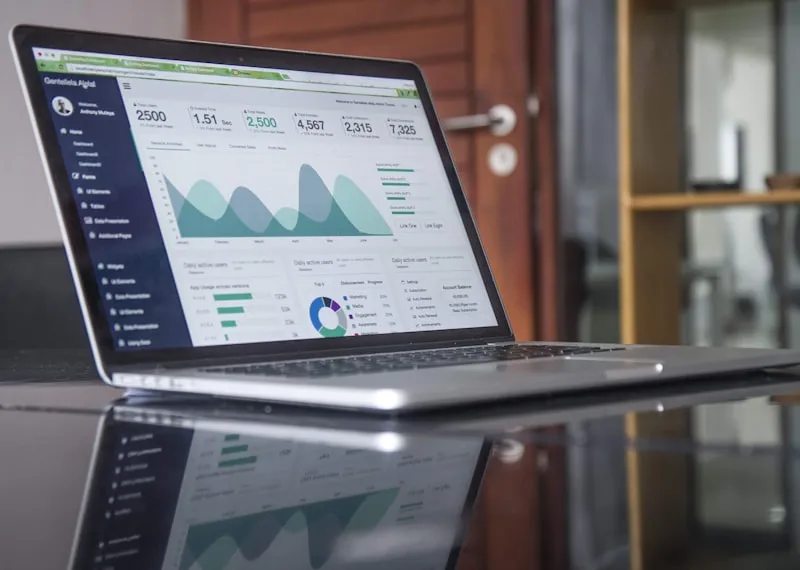
Design Isn't Decoration: Why UX/UI Is a Business Multiplier
Most businesses treat design as a finishing step. That thinking costs customers and conversions - here's what design does for your bottom line.
From concept to App Store deployment, we build high-performance mobile applications that meet the purpose with technical stability and an intuitive user experience.
The first decision on any mobile project is native or cross-platform, and it is worth spending time on. React Native and Flutter share most of the code across iOS and Android, which suits apps where the interface is forms, lists and data. Swift and Kotlin are the better answer when the app leans on device hardware, background processing, or platform APIs that move faster than the bridges to them. We make that call against what the app actually has to do, not by default.
We deliver production-ready iOS and Android apps defined by clean code, high-performance modern architecture for a responsive user experience.
Swift and SwiftUI, extending to App Clips and watchOS where the product calls for it. Building against Apple's own frameworks means the app follows the platform conventions users already know, and it means keeping up with what each iOS release deprecates.
Kotlin and Jetpack Compose, tested on real hardware rather than only in an emulator. Android fragmentation is the recurring cost here: screen sizes, OS versions, and manufacturer changes to background execution all have to be accounted for.
Our React experts write near-native code that maximizes shared logic without compromising performance and design. This keeps platform-specific work to a minimum while preserving native performance characteristics.
Flutter renders its own widgets rather than mapping to platform controls, so the interface looks the same on both operating systems. That is an advantage when brand consistency matters more than platform familiarity, and a drawback when it does not.
We build for behaviour, not just screens. By prioritizing “thumb-zone’ ergonomics and platform-specific logic, we eliminate user friction before it happens. Each interface is grounded by usability research and validated against every aspect.
Field service tools and B2B portals that read and write to the systems your operation already runs on, including SAP, Salesforce and Dynamics 365. The integration layer is usually the larger part of this work, and it is where the schedule tends to move.
The backend behind the app, built on AWS with GraphQL or REST over Node.js. Mobile clients are unusual in that they cannot be updated on demand, so the API needs versioning from the first release and has to keep serving whatever version users are still running.
Apps that keep working without a signal, with local storage and a sync queue that reconciles when the connection returns. The real design work is conflict handling: deciding what happens when the same record changed on the device and on the server while they were apart.
App Deployment isn’t everything we do. We also manage the end-to-end submission and compliance management process. Our App Store Optimization (ASO) strategy focuses on keyword and functionality-based optimization to drive organic downloads from day one.
Why global brands trust IDOWS Apex for their mobile ecosystems
Where cross-platform fits, one codebase serves both stores, so a feature is written and tested once rather than twice.
Interface work that follows iOS and Android conventions: gestures, transitions, and typography that behave the way users expect on their device.
API calls batched and cached on the device, because the slowest part of a mobile app is usually the network, not the code.
Backend architecture sized for current traffic with a clear path to more, rather than built for a peak nobody has forecast.
Secure storage for credentials on the device, encrypted transport, and permission handling that satisfies both app stores at review.
Apps need maintenance whether or not you add features. Each OS release deprecates something, and store policies change.

We follow a structured, user-first approach for developing responsive mobile apps that perform at scale.
Experienced engineers across modern mobile frameworks and tooling
Deep technical analysis, architectural case studies, and strategic perspectives from our senior development teams.

Most businesses treat design as a finishing step. That thinking costs customers and conversions - here's what design does for your bottom line.

Agile works beautifully for small teams. When the enterprise gets involved, scaling agile isn't about doing more agile - it's a different problem.

Every growing business faces the same decision: buy off-the-shelf or build custom? It's a strategic choice with massive consequences for your bottom line.
Related work that often sits alongside this one in the same engagement.