
Design
August 12, 2025
3 min read
The Critical Role of UX/UI Design (And Why Most Businesses Underestimate It)
Why beautiful design is more than just aesthetics—it's the key to user retention and business success.
IDOWS Apex
Read At IDOWS Apex, we specialized in the maintenance, optimization, and bridge-engineering for mission-critical mainframe systems. We ensure your most reliable infrastructure continues to perform at peak efficiency while creating the necessary interfaces for modern digital integration.
At IDOWS Apex, we specialized in the maintenance, optimization, and bridge-engineering for mission-critical mainframe systems. We ensure your most reliable infrastructure continues to perform at peak efficiency while creating the necessary interfaces for modern digital integration.
Bespoke technical guidance for industry leaders — engineered to solve complex mainframe challenges.
Expert maintenance of COBOL, PL/I, and Assembler codebases to ensure stability and business continuity.
Building modern high-speed bridges between your mainframe data and cloud-native applications.
Implementing advanced RACF management and intrusion detection for your most sensitive enterprise data.
Deep-dive analysis of MIPS usage to identify optimization opportunities and reduce operational costs.
Designing and testing robust failover systems for high-availability mainframe environments.
Providing elite technical talent to fill the gap in specialized mainframe engineering skills.
Why brands trust IDOWS Apex with their core logic
Ensure your core business logic remains operational and reliable 24/7.
Maximize your MIPS efficiency to reduce high recurring mainframe costs.
Allow your legacy data to power your most innovative cloud and mobile apps.
Identify and neutralize security and performance vulnerabilities in aging hardware.
Access rare technical expertise that is increasingly difficult to find in-house.
Extend the life and value of your most significant technical investments.
A methodical approach to delivering high-performance digital solutions.
Mapping your current mainframe architecture and integration points.
Identifying technical gaps, risks, and performance bottlenecks.
Creating a detailed multi-year technology roadmap and resource plan.
Designing a maintenance and integration roadmap for long-term stability.
Phased engineering rollout with rigorous technical oversight and safety.
Continuous measurement of results and strategic refinement for ROI.
Powering mission-critical systems with robust legacy expertise
The systems of record for core banking, insurance claims, government benefits, and large-scale logistics run on IBM Z hardware for the same reason they've run there for forty years: nothing else on the market matches z/OS for transaction throughput, uptime, and auditability at that scale. Rewriting that logic wholesale is rarely the right answer — the risk of introducing subtle defects into a payroll or settlement engine that has been correct for decades usually outweighs any benefit of a rewrite, and the cost of a multi-year replatforming project is difficult to justify against a system that, properly maintained, keeps working.
What these organizations actually need is engineering discipline applied to infrastructure most of the market has stopped hiring for: COBOL and PL/I programmers who can safely modify a production batch job, RACF administrators who understand access control at the mainframe level, and integration engineers who can expose that logic to the mobile and web channels customers now expect. We built our mainframe practice around exactly that gap — keeping the platform that already works reliable, secure, and connected to everything built around it since.
Before a single line of code changes, we inventory a program portfolio built up over decades and sort it three ways: leave it alone, refactor it in place, or plan a phased rewrite. Most engagements find that only a small fraction of a codebase is genuinely fragile enough to justify rewrite risk — the rest just needs disciplined maintenance.
Overnight settlement, billing, and reconciliation runs are governed by JCL and scheduler dependencies written when processing windows were far more forgiving. We re-sequence job streams, parallelize what can safely run concurrently, and tune I/O so a batch cycle that used to threaten the morning cutoff finishes with room to spare.
Deposit ledgers, loan servicing, and claims processing running on IBM Z hardware cannot tolerate an unplanned outage. We plan every maintenance window, OS upgrade, and capacity change around the transaction volumes these systems actually carry, so core processing keeps running while the platform underneath it evolves.
Mobile banking apps and partner integrations need to call business logic that still lives inside CICS transactions written in the 1990s. We wrap those transactions behind a REST or JSON interface rather than rewriting them, so decades of tested logic keeps running underneath a modern channel experience.
Analytics and reporting teams increasingly need mainframe data outside the mainframe. We build change-data-capture pipelines that replicate VSAM files and DB2 tables into a cloud data warehouse on a defined cadence, without touching the production transaction path that generates that data.
A DR plan that has never been rehearsed is a hypothesis, not a plan. We run scheduled failover exercises against your recovery site, measure actual recovery time against the regulatory or contractual objective, and close the gaps a real failover would expose before an actual outage does.
Most environments we take on are structured around logical partitions carved out of a shared z/OS instance, with production, test, and disaster-recovery LPARs kept strictly separated. Inside production, CICS regions host the online transaction processing that a bank teller or claims adjuster interacts with directly, while DB2 or VSAM handles the underlying data with the record-level locking and recovery guarantees that make consistent settlement possible even under heavy concurrent load.
Batch processing runs on its own schedule, coordinated through JCL and a job scheduler, typically overnight when transaction volume is low. Where that logic needs to reach outside the mainframe, we introduce an API gateway layer — either IBM's z/OS Connect or a purpose-built REST wrapper — that translates CICS transactions into JSON without altering the underlying COBOL, alongside MQ or file-based interfaces for systems that exchange data in batches rather than in real time. Monitoring and observability tooling sits across all of it, watching MIPS consumption, region health, and batch completion times so a developing problem surfaces before it becomes an outage.
Access control on a mainframe runs through RACF, and we treat every ID, group, and dataset profile as something to be reviewed rather than inherited. Segregation of duties between the people who write production changes and the people who approve them is enforced at the platform level, not just in a change-management document, and every bridge we build between the mainframe and cloud systems encrypts data in transit and at rest so a decades-old backend doesn't become the weakest link in an otherwise modern security posture.
Financial institutions running core processing on IBM Z answer to examiners under frameworks like FFIEC and, where card data is involved, PCI-DSS, and every one of those frameworks cares about documented change control and demonstrable recovery capability as much as raw uptime. Insurers and government agencies face their own regulator-mandated recovery time objectives for benefit and claims systems. Our change process — reviewed migrations, tested rollback plans, and a DR cadence that's actually exercised rather than filed away — is built to hold up under that kind of scrutiny.
Mainframe scalability is a cost conversation as much as a technical one, since MIPS consumption drives licensing spend directly. We profile which programs and batch jobs consume disproportionate processor cycles, tune the worst offenders, and model capacity against projected transaction growth so a client isn't surprised by a licensing tier change mid-year. Offloading suitable workloads — reporting queries, archival lookups — to distributed systems is often the fastest way to buy back MIPS headroom without touching the core transaction path at all.
When a client does need to move logic off the mainframe, we favor a strangler-style approach over a big-bang rewrite: identify one bounded subsystem, build its replacement alongside the existing COBOL program, run both in parallel long enough to prove the new path produces identical results, and only then retire the original. This keeps the mainframe processing live transactions throughout, which is the difference between a Legacy Modernization effort that ships safely and one that stalls halfway through a rewrite nobody can finish.
IBM Z and z/OS remain the platform of record for the workloads we support, and our engineers work directly in COBOL, PL/I, and Assembler rather than treating those languages as a black box to be avoided. Where a bridge to distributed systems is needed, C and C++ handle the performance-sensitive glue code that talks to mainframe subsystems, since those languages interoperate cleanly with the platform's native calling conventions in ways a higher-level language typically can't.
Data pipelines built on change-data-capture tooling move VSAM and DB2 records into cloud warehouses without disturbing the transactional workload generating them, while an API gateway layer exposes CICS transactions to REST-consuming applications. Monitoring and observability tooling watches region health, batch completion, and MIPS trends continuously, since on a platform this central to the business, the cost of an undetected problem compounds fast.
Financial institutions running core deposit and loan processing are the most common client for this practice, followed closely by insurers whose claims and policy administration systems have accumulated decades of business rules that no one wants to reverse-engineer from scratch. Government agencies running tax collection, benefits disbursement, or licensing systems face the same calculus, as do airlines with reservation systems and large retailers with inventory and distribution logic still running on Big Iron behind the scenes. What connects all of them is a system that has to be right every single time, running on a platform most new engineers were never trained on.
Every engagement starts with a discovery pass that maps the actual codebase, job schedules, and integration points rather than relying on documentation that hasn't been updated in a decade — legacy environments almost always diverge from what's written down. From there we assess technical risk program by program, flagging what's fragile, what's stable, and what's genuinely undocumented, before producing a roadmap the client's own IT leadership can defend to their board. Execution happens in phases with rigorous technical oversight — no unreviewed change reaches a production LPAR — and every engagement closes with a formal handoff and knowledge transfer, since the point of this work is to reduce a client's dependency on scarce specialist skills, not deepen it. Across the mainframe engagements we've run for banking, insurance, and public-sector clients, that combination of documented discovery, staged execution, and rigorous review is what keeps a forty-year-old system reliable for another decade.
Deep technical analysis, architectural case studies, and strategic perspectives from our senior development teams.
Why beautiful design is more than just aesthetics—it's the key to user retention and business success.
AI implementation has a cost structure unlike most software projects — the visible costs are only a fraction of what you'll actually spend to get a production system running well.
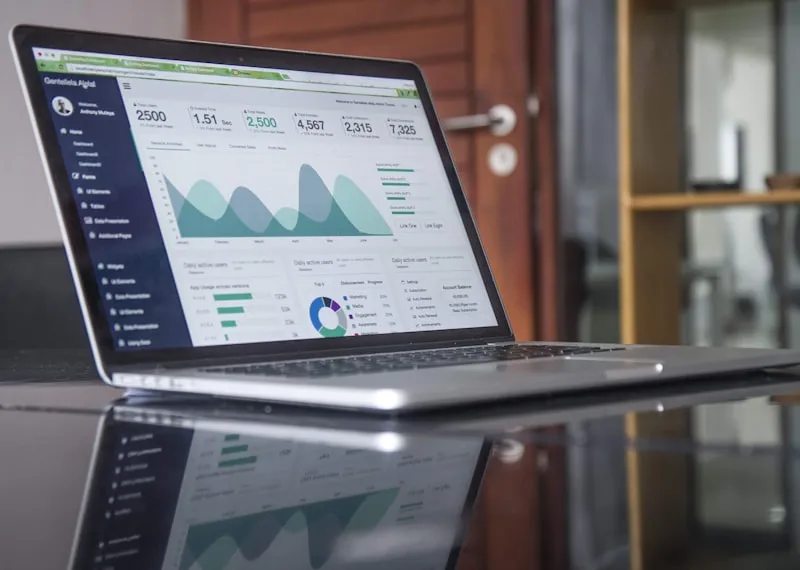
Every growing business faces the same decision: buy off-the-shelf or build custom? It's a strategic choice with massive consequences for your bottom line.
Explore our complementary expertise to accelerate your digital transformation journey.